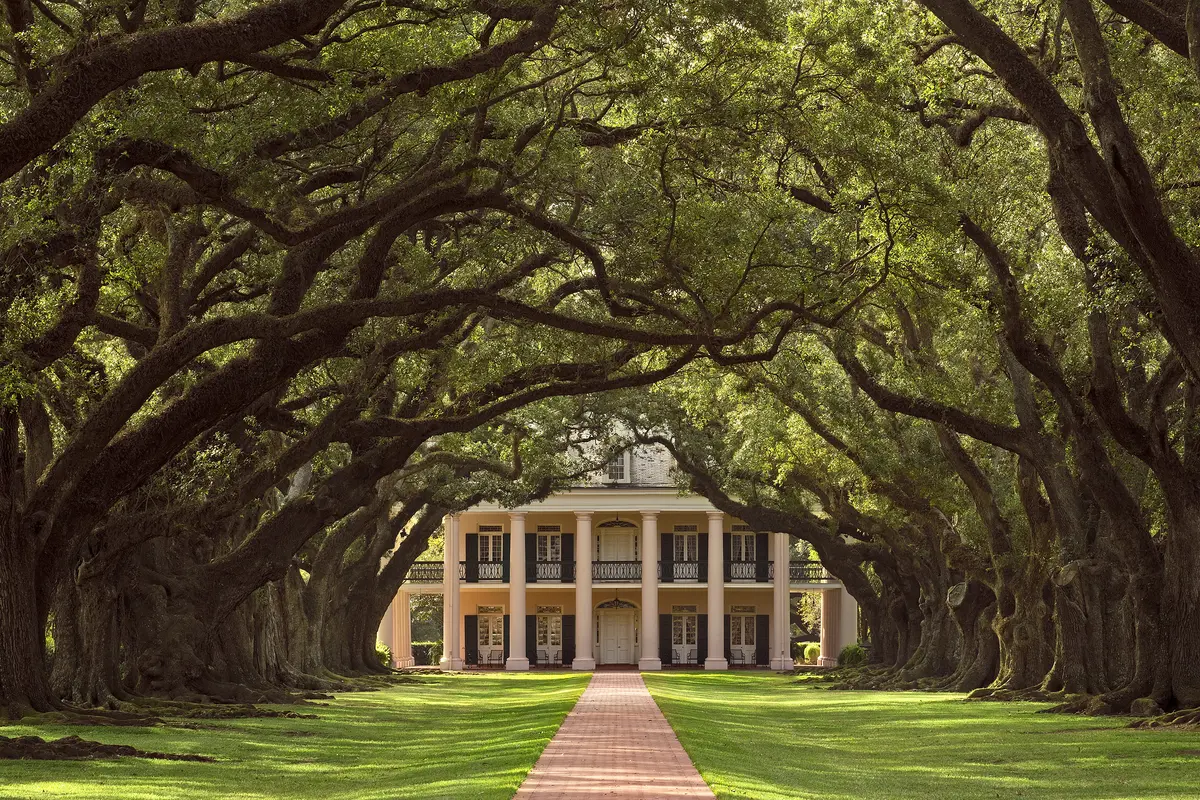
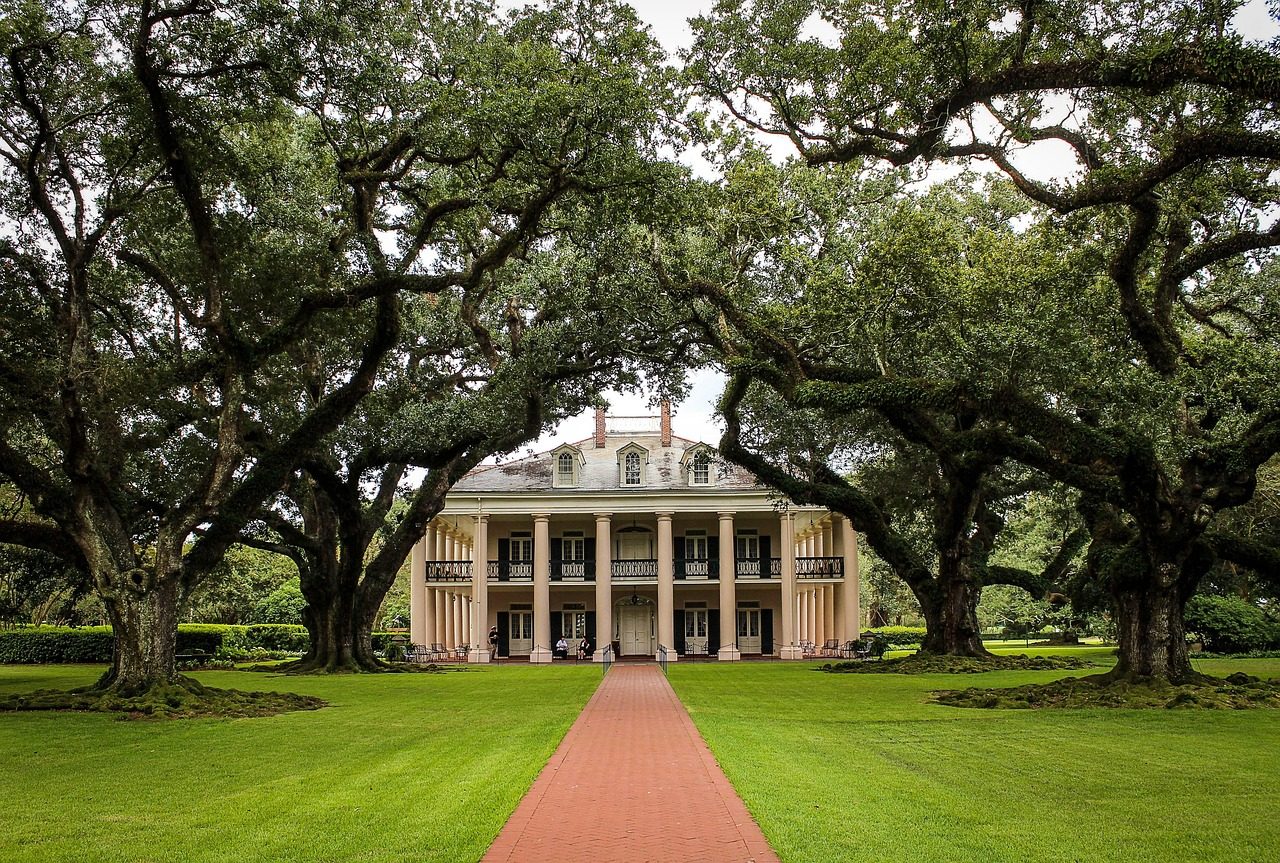
The Alley of Oaks
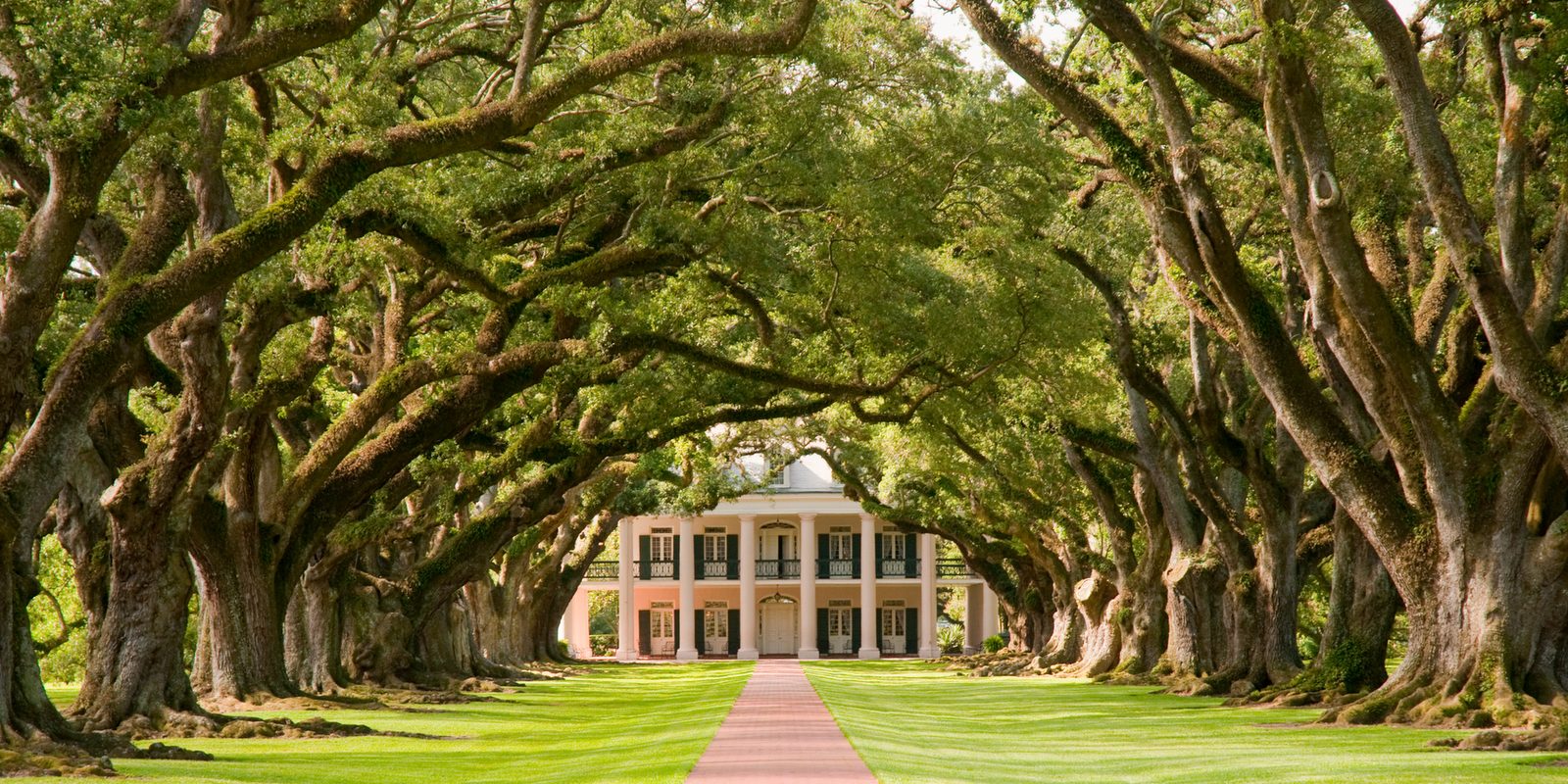
A quarter-mile canopy of 28 southern live oak trees planted in the early 18th century, leading directly to the river.
Stand at the far end to capture the symmetry of the path.

A plantation in New Orleans refers to the large agricultural estates along the Mississippi River that produced cash crops—primarily sugarcane and cotton—using enslaved labor from the 1700s through the Civil War. Oak Alley Plantation, 60 miles upriver from New Orleans, stands as one of the most recognizable examples, with its quarter-mile canopy of 28 live oaks framing a Greek Revival mansion built in 1839.
Quick answer
A plantation in New Orleans is a historic estate that operated as a commercial agricultural enterprise, typically producing sugarcane or cotton through the forced labor of enslaved people. These properties combined grand plantation houses—often Greek Revival or Creole in style—with functional structures including slave quarters, sugar mills, and fields. Oak Alley Plantation exemplifies this model: 25 acres of grounds, a mansion with 28 Doric columns, and preserved quarters that document the lives of the 220 enslaved individuals who worked the estate at its peak.
The 28 live oaks lining the approach to Oak Alley Plantation predate the mansion itself by nearly a century—planted in the early 1700s, decades before the estate took its current form. What is a plantation in New Orleans becomes clearer when you understand that these were not simply farms but complex economic systems built on enslaved labor, designed to extract maximum profit from Louisiana's fertile alluvial soil and brutal growing seasons. The term "plantation" in the Louisiana context describes estates that combined residential grandeur with industrial-scale agriculture. Oak Alley's Greek Revival mansion, completed in 1839 by Jacques Telesphore Roman, housed the planter family in 16,000 square feet of formal rooms and galleries. Behind that facade operated a sugarcane enterprise requiring year-round labor: planting in spring, cultivating through summer's heat, harvesting during grinding season from October through December. The 220 enslaved people who worked Oak Alley lived in wooden quarters along the levee, structures that have been reconstructed and now anchor the site's slavery exhibit. Understanding a New Orleans area plantation means recognizing the Mississippi River's role. The Great River Road—Highway 18 past Vacherie—linked dozens of estates that shipped hogsheads of sugar and cotton bales downriver to New Orleans' port. Oak Alley's location 60 miles upriver placed it within the sugar belt, where the 100-day freeze-free season allowed sugarcane cultivation. The mansion's 28 Doric columns and double-gallery design reflected wealth generated by that crop and the people forced to produce it. Today Oak Alley operates as a museum that interprets both the planter class lifestyle and the enslaved community's experience. The Big House tour covers architecture and the Roman family narrative; the grounds include the restored 1839 sugar mill, blacksmith shop, and furnished slave quarters that present primary-source accounts and archaeological findings. The 22 steps required to enter the main house reflect its elevated construction—a flood defense measure typical of River Road estates. Guided tours run continuously during operating hours, with the coolest temperatures and smallest groups arriving between 08:30 and 11:00.
“The 28 live oaks lining Oak Alley's approach predate the 1839 mansion by nearly a century, planted when the land was still an early French colonial holding.”
What is a plantation in New Orleans? Historically, it was a large agricultural estate centered on cash crops—sugar, cotton, indigo—cultivated by enslaved labor. Oak Alley Plantation, completed in 1839 along the Mississippi River, exemplifies the antebellum model. French Creole planter Jacques Telesphore Roman commissioned the Greek Revival mansion, which took three years to build. The estate's name derives from the quarter-mile alley of twenty-eight live oaks, planted in the early eighteenth century by an unknown French settler. By the 1840s, Oak Alley operated as a working sugar plantation. Enslaved workers—over one hundred individuals at the estate's peak—planted, harvested, and processed cane in grueling conditions. The 1853 harvest alone yielded twenty-five thousand pounds of sugar. Following the Civil War and Emancipation, the Roman family sold the property in 1866. Subsequent owners struggled to maintain profitability without forced labor, and sugar production ceased by the early twentieth century. The Andrew and Josephine Stewart Foundation acquired Oak Alley in 1925, restoring the mansion and grounds. In 1972, the site opened to the public as a historic property. Today, visitors walk the same oak alley that framed the original approach, tour the Big House's twenty-eight Doric columns, and explore exhibits detailing the lives of enslaved communities. Reconstructed slave quarters and interpretive panels provide context for understanding what a plantation in New Orleans represented—not merely an architectural landmark, but a site where economic ambition depended on human bondage. The estate's physical layout, from the columned gallery to the river levee, remains largely intact, preserving a tangible record of Louisiana's plantation economy.
French colonists establish sugar cultivation along the Mississippi River
Unknown settler plants the double row of live oaks that will define Oak Alley
Jacques Telesphore Roman purchases the property and commissions construction of the Greek Revival mansion
Oak Alley mansion completed after three years of construction
Estate produces twenty-five thousand pounds of sugar at peak operation
Roman family sells Oak Alley following the Civil War and collapse of the slave economy
Andrew and Josephine Stewart Foundation acquires and begins restoring the estate
Oak Alley opens to the public as a historic site and museum
The layout of Oak Alley Plantation reflects the architectural and environmental design typical of 19th-century riverfront estates. Visitors explore the formal grounds, the primary residence, and the remaining structures that define this landscape.
A quarter-mile canopy of 28 southern live oak trees planted in the early 18th century, leading directly to the river.
Stand at the far end to capture the symmetry of the path.
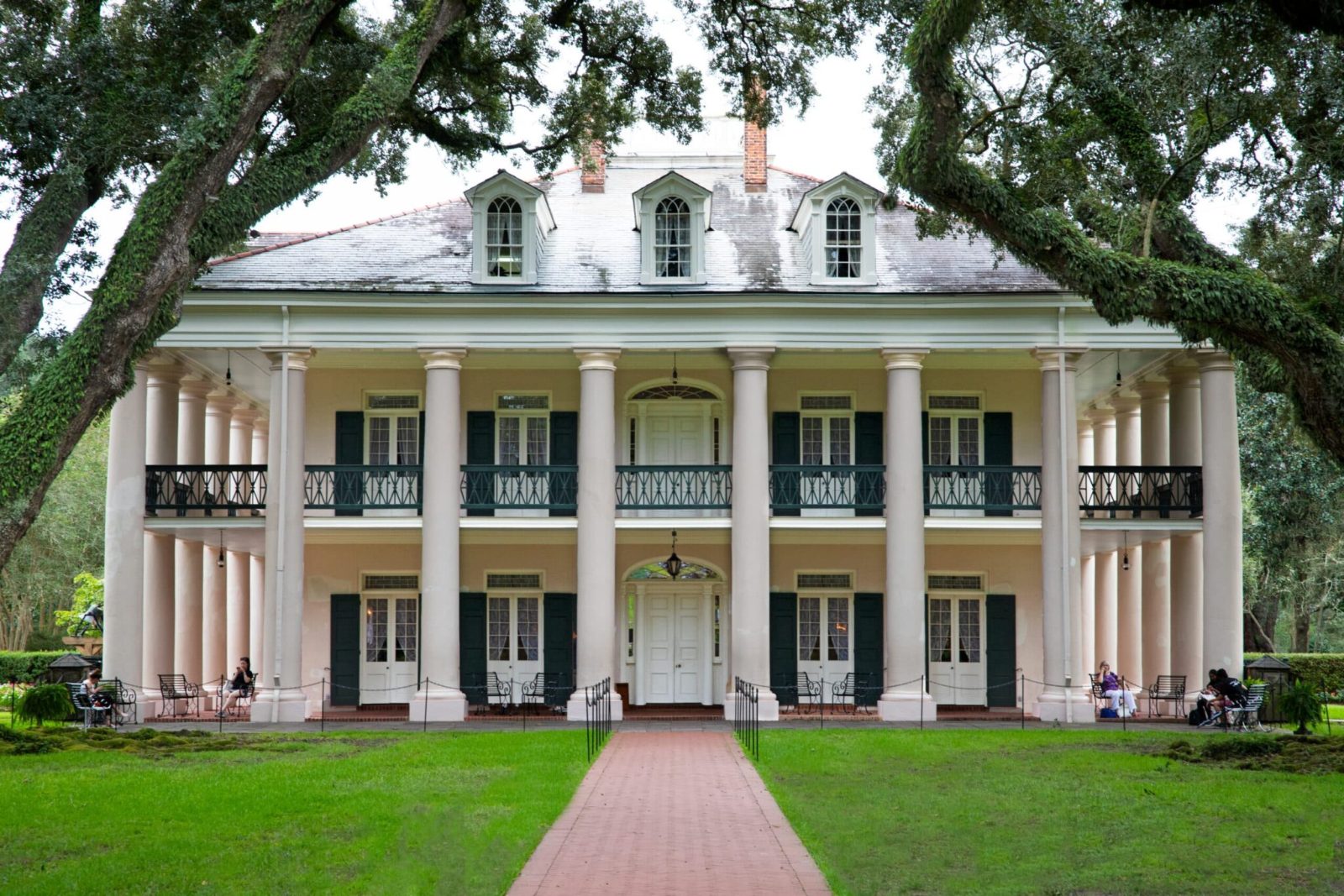
A Greek Revival mansion featuring a wrap-around gallery supported by 28 square Tuscan columns.
Walk the second-floor gallery for views of the Mississippi River.
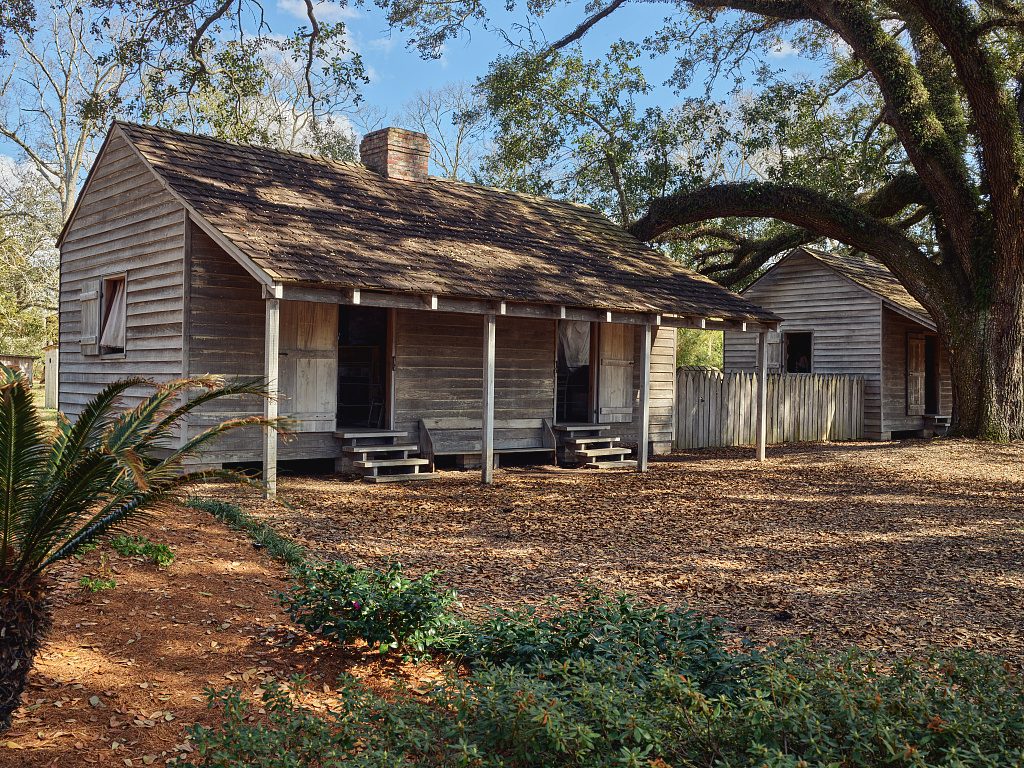
A series of reconstructed cabins documenting the lives and labor of the enslaved people held at the site.
Read the placards carefully to understand the personal stories presented.
Manicured grounds surrounding the main residence, showcasing period-appropriate flora and landscape design.
Walk the paths during the early hours to avoid midday heat.
The best arrival window for Oak Alley Plantation is 08:30–11:00. Arriving during this period allows visitors to experience cooler temperatures, softer lighting for photography, and smaller crowds.
—
Visiting early in the week reduces wait times for the Big House tour. Arriving at 08:30 ensures a quieter experience.
Mild, pleasant temperatures
Temperatures are moderate, making outdoor exploration of the grounds more comfortable.
Cooler, lower humidity
The humidity levels drop significantly, providing a more temperate climate for walking the site.
Verdict: For the most comfortable experience, aim for weekday mornings during the spring or fall months, arriving at the 08:30 opening time.
Oak Alley Plantation operates daily throughout the week to accommodate visitors. The site maintains consistent hours for all seven days.
Oak Alley Plantation is located at 3645 Highway 18 (Great River Road), Vacherie, LA 70090, USA, situated approximately 60 miles west of New Orleans along the Mississippi River. The most direct approach is by vehicle, allowing for travel along the historic Great River Road.
Follow I-10 W to LA-3127 S toward Vacherie
Private hire service from New Orleans city center
Organized tour transport via local shuttle operators
Plan to arrive early for cooler temperatures, softer light, and smaller crowds. The best arrival window is 08:30–11:00.
Everything you need to know about what is a plantation in new orleans
A plantation in New Orleans typically refers to a large estate along the Mississippi River, historically centered on agricultural production. These sites are significant Louisiana landmarks that provide context regarding the region's complex economic and social history. Understanding what is a plantation in new orleans helps visitors grasp the architectural and cultural impact of the antebellum period. Modern tours focus on preservation, historical education, and exploring the grounds of these significant sites.
Oak Alley is widely recognized as a premier example of what is a plantation in new orleans due to its iconic alley of southern live oaks and Greek Revival architecture. It serves as an essential stop for those researching the history of the region. Many travelers consider this site the definitive reference for what is a plantation in new orleans when planning their itinerary.
Admission is 30 USD per adult, which includes the guided Big House tour. This fee supports the ongoing maintenance and preservation of the historic buildings and landscape. Visitors should check the official site for current details regarding group visits or special programs.
The best arrival window is 08:30–11:00 to ensure cooler temperatures, softer light, and smaller crowds. Arriving during these hours allows for a more comfortable exploration of the expansive grounds and oak alley. Planning your visit early in the day is highly recommended to maximize your experience.
The Big House tour requires navigating 22 steps for access. Guests should be aware of this physical requirement when planning their visit to the main house. Additional information regarding mobility assistance is available through the property staff.
While you can explore the grounds, participating in a guided tour is the standard way to learn about the site's history. It is generally advisable to check availability online to ensure your preferred time slot is open. Booking ahead ensures that your visit to this notable river road destination is secured.
Visitors can view the historic main house, the famous canopy of oak trees, and various exhibits concerning the site's past. The grounds offer a tranquil atmosphere reflecting the architectural grandeur of the 19th century. Walking the paths between the ancient trees is a highlight for many guests at this heritage site.
Oak Alley Plantation & Swamp Tour Combo
Read more Tickets & toursPlantation and Airboat Tour Combo
Read more GuideWhere are the Swamp Tours in New Orleans
Read more GuideCan you Stay at a Plantation in New Orleans
Read more Tickets & toursWhitney Plantation & Swamp Tour Combo
Read more