
8 hr 30 min
Oak Alley Plantation & Bayou Airboat Adventure
Step into Louisiana's past at a historic plantation, then race through swamplands hunting for alligators
Reserve
Hand-picked by our editors — only the best 5 experiences from 18 reviewed.
Verified partners for every tour, free cancellation where available, and instant confirmation on every booking.
8 hr 30 min
Step into Louisiana's past at a historic plantation, then race through swamplands hunting for alligators
Reserve
7 hr 30 min
Explore Louisiana's swamplands by boat and tour a historic antebellum estate on this full-day excursion
Reserve
7 hr 30 min
Explore a legendary antebellum estate and glide through Louisiana's wild swamplands in one unforgettable day
ReservePrices from verified partners. Availability updates in real time at checkout. Free cancellation policies apply where shown.
The landmarks, rooms, and views travelers on this tour remember — all visible on a single visit.
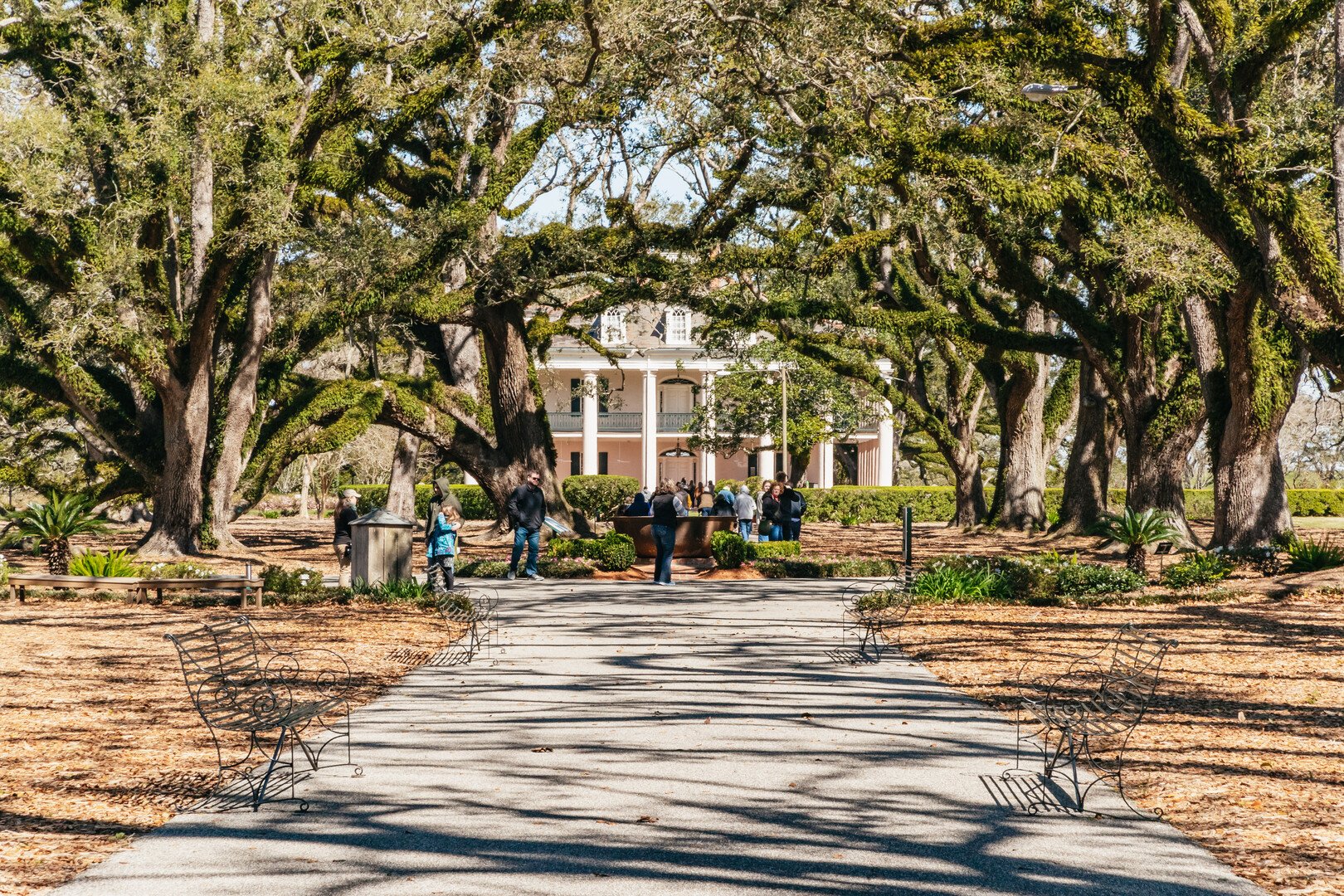
A tunnel of 28 massive, centuries-old live oaks framing the entrance to the house.
A Greek Revival mansion built in 1839 with distinctive square columns.
A poignant exhibit detailing the lives of enslaved people who resided on the property.
An outdoor exhibit highlighting the plantation's history as a sugar producer.
Demonstrations of blacksmithing techniques used on the historical plantation site.
Oak Alley Plantation provides a quintessential grand estate experience, while Laura Plantation offers a deeper dive into Creole heritage, making them distinct landmarks for any traveler.
| Feature | Top pick Oak Alley Plantation | Laura Plantation |
|---|---|---|
Focus |
Iconic architecture and grounds | Creole culture and legacy |
Architectural Style |
Greek Revival mansion | Raised Creole cottage |
Primary Tour Narrative |
The Big House and lives of residents | Personal histories of enslaved people |
Grounds/Photography |
Famous quarter-mile oak alley | Working farm and outbuildings |
Historical Context |
Antebellum era wealth | Four generations of Creole records |
| See tickets → |
Verdict: Choose Oak Alley for its expansive photography opportunities and iconic scenery, or select Laura Plantation for a narrative-driven focus on complex family and social histories when booking your new orleans plantation and airboat tour tours.
Choose your ticket, select your date, and reserve in under two minutes. Secure checkout handled by our verified partner.
Instant confirmation by email, with a mobile voucher you can save offline. No printing, no queuing at a collection desk.
Arrive at the entrance, show your voucher on your phone, and walk in. Most tickets include priority or skip-the-line access.
Practical details for your visit straight from our verified partners — hours, access, rules, and how to get there.
Dress in light, breathable clothing suitable for Southern humidity. Comfortable walking shoes are required for traversing the 63-acre historic grounds.
Standard bags are permitted on the grounds but must be stored outside the Big House. Security reserves the right to inspect items for prohibited objects.
Photography is welcome throughout the Oak Alley Plantation grounds. Indoor photography inside the Big House is strictly prohibited to protect historical artifacts.
Most exhibits are wheelchair accessible. Please note that the Big House second floor is not accessible to those with limited mobility.
Mobile phones are permitted on the site. Please ensure devices are muted while participating in guided tours within the Big House.
Families are welcome, though strollers are restricted inside the Big House. Baby strollers may be stored at the entrance during the interior tour.
The onsite restaurant provides breakfast and lunch, but picnicking on the grounds is not permitted. Designated picnic tables are located near the parking area.
Pets are prohibited on the historic site. Service animals are the only exception allowed for visitors.
As a new orleans plantation and airboat tour destination, visitors should arrive 30 minutes before their Big House reservation. Rideshare services are unreliable in Vacherie.
Best time to go, insider tips, nearby landmarks, and the cancellation fine print — flip through to skim what matters to you.
Flexible, no hidden fees.
All admissions are non-refundable and non-transferable. Rates are subject to change, and the 30 USD fee for the Big House tour is fixed per adult.
Jacques Telesphore Roman completed Oak Alley in 1839, planting twenty-eight live oaks in parallel rows that frame the mansion's approach from the Mississippi levee. Each tree stands twelve feet in circumference; dendrochronologists date the oldest specimens to the 1710s, decades before French colonists cleared the land for indigo. The quarter-mile alley predates the house itself, planted by an unknown settler whose vision outlasted three property transfers and two national flags. Roman's Greek Revival design—fourteen Doric columns across the front gallery, fourteen more at the rear—mirrors the oak count, a symmetry that colonial planters read as divine proportion. The estate operated as a sugar plantation until 1866, when emancipation and falling commodity prices forced the Roman heirs to sell. Josephine Stewart purchased the property in 1925, opening it to tourists in 1940 and establishing the restoration endowment that funds current conservation work. Her heirs transferred ownership to a nonprofit foundation in 1972, ensuring public access and archival preservation. Today the estate interprets both planter affluence and enslaved labor through dual narratives. The Big House tour examines Roman family wealth—imported Carrara marble mantels, hand-painted ceiling medallions, Baccarat crystal chandeliers—while restored slave quarters on the grounds document the lives of the 220 people who cultivated, milled, and refined the cane that generated that wealth. Exhibits include ironwork forged on-site, cypress timber hewn from surrounding swamps, and account ledgers recording individual names, ages, and sale prices. The surrounding bayou ecosystem frames the second half of most New Orleans plantation and airboat tour itineraries. Manchac Swamp, accessible via Highway 51 north of LaPlace, shelters bald cypress groves where Spanish moss curtains the waterways. Airboat operators navigate narrow channels past alligator nesting sites, great blue heron rookeries, and submerged tupelo stands. The contrast—formal architecture against primordial wetland—defines Louisiana's cultural geography, where European land-use patterns collided with subtropical hydrology that resists permanent settlement.
"The quarter-mile alley predates the house itself, planted by an unknown settler whose vision outlasted three property transfers and two national flags."
A step-by-step walkthrough of the visit — what you'll see, how long each stage takes, and the details that matter.
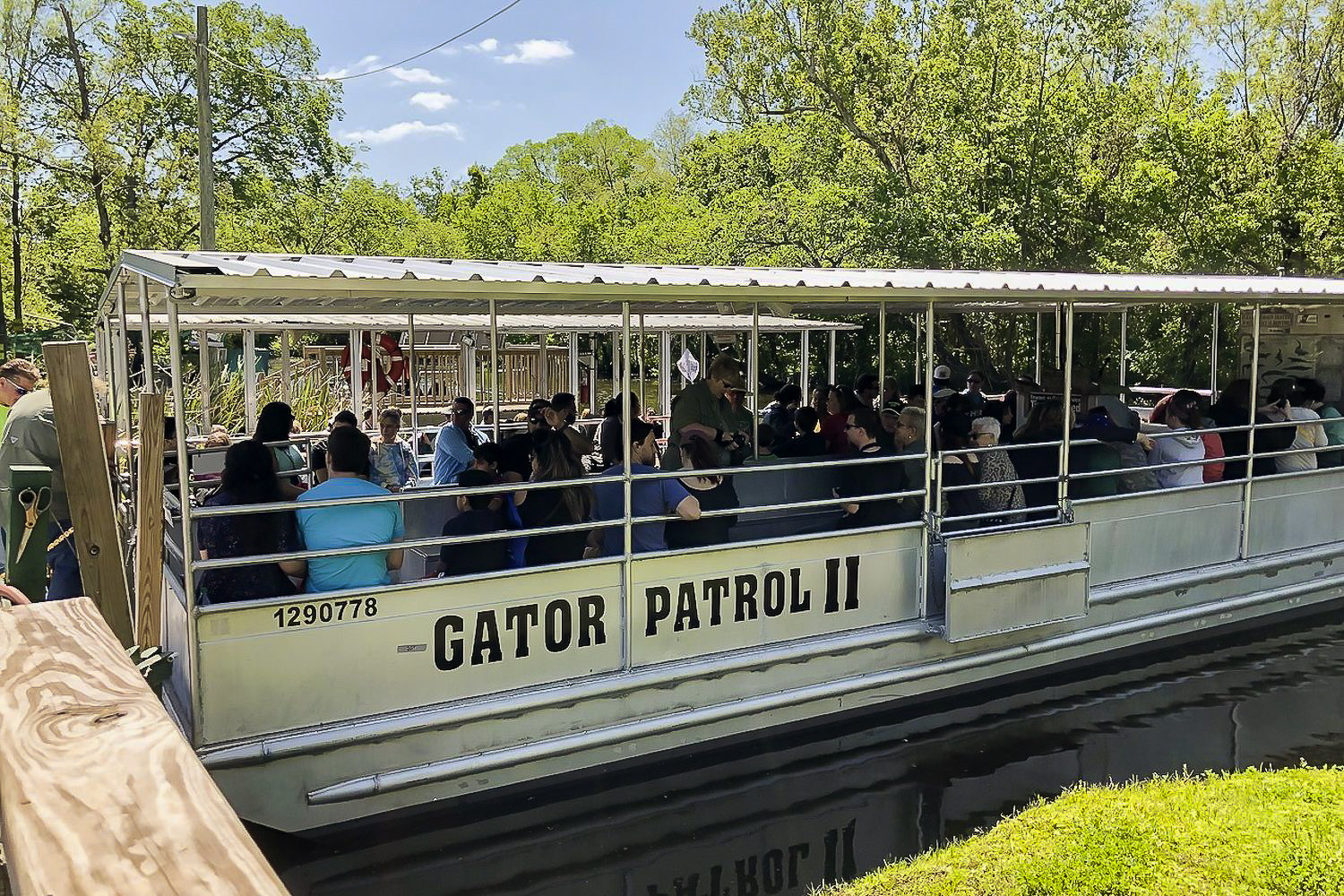
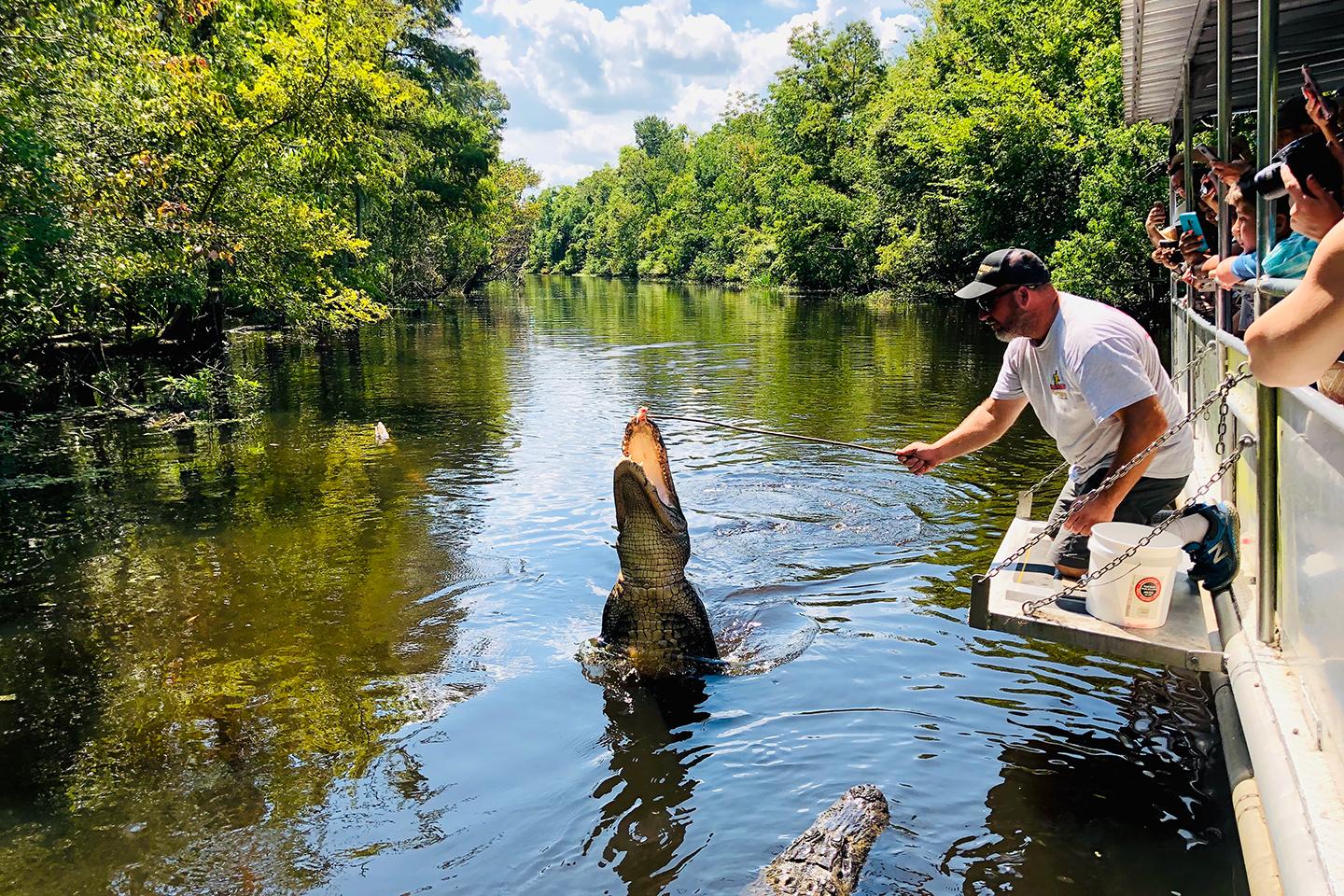
You arrive at 3645 Highway 18 by 9:00 AM, when morning light filters through the oak canopy and temperatures hover in the mid-seventies. The Big House tour begins on the lower gallery, where your guide explains the twenty-eight-inch-thick brick walls that insulate against summer heat. You climb the central staircase to the second-floor bedrooms, pausing at the dining room's ten-foot windows that face the river. Docents identify individual portraits in the Roman family collection and demonstrate the rope-and-pulley fan system servants operated during meals. After forty-five minutes inside, you walk the grounds to the reconstructed slave quarters, eight whitewashed cabins along the rear property line. Interpretive panels detail daily routines—dawn cane cutting, midday meal preparation, evening livestock tending—and name specific individuals whose labor built the estate's wealth. The on-site blacksmith shop displays tools forged in the 1840s. Your driver shuttles you twenty miles north to the airboat launch at Frenier Landing. You board a flat-bottomed vessel seating twelve passengers, and the captain accelerates into Manchac Swamp's labyrinth of channels. Cypress knees break the water's surface; an eight-foot alligator sunbathes on a rotting log. The captain cuts the engine near a heron rookery, and you photograph egrets against the tupelo canopy. The airboat returns you to the dock after ninety minutes, completing the day's dual narrative of cultivated estate and untamed wetland.
Oak Alley Plantation is open daily from 08:30–16:45. Arrive between 08:30–10:00 for the best experience.
Most exhibits at Oak Alley Plantation are accessible. While wheelchairs are permitted on grounds, the second floor of the Big House is not accessible.
Bags are permitted on the Oak Alley Plantation grounds but must be stored before entering the Big House.
Entrance is 30 USD (General admission including Big House tour, per adult). This is the standard rate for your new orleans plantation and airboat tour entry.
Arrive between 08:30–10:00 to avoid crowds and peak heat during your new orleans plantation and airboat tour.
Children are welcome at Oak Alley Plantation, though strollers are restricted inside the mansion.
Yes, the Oak Alley Plantation Restaurant is located adjacent to the historic site for breakfast and lunch.
Photography is allowed outdoors throughout the grounds, but prohibited inside the Big House during your new orleans plantation and airboat tour.
The site is located at 3645 Highway 18, Vacherie, LA 70090, USA. We recommend renting a vehicle as public transit to the plantation is unavailable.