
8 hr 30 min
Oak Alley Plantation & Bayou Airboat Adventure
Visit a historic Southern estate and speed through Louisiana swamplands on this full-day combo tour
Reserve
Hand-picked by our editors — only the best 5 experiences from 12 reviewed.
Verified partners for every tour, free cancellation where available, and instant confirmation on every booking.
8 hr 30 min
Visit a historic Southern estate and speed through Louisiana swamplands on this full-day combo tour
Reserve
7 hr 30 min
Explore Louisiana's wild bayous and a grand antebellum estate on this full-day guided excursion from New Orleans
Reserve
7 hr 30 min
Journey through Louisiana's storied past with a mansion tour and wildlife-filled swamp cruise
ReservePrices from verified partners. Availability updates in real time at checkout. Free cancellation policies apply where shown.
The landmarks, rooms, and views travelers on this tour remember — all visible on a single visit.
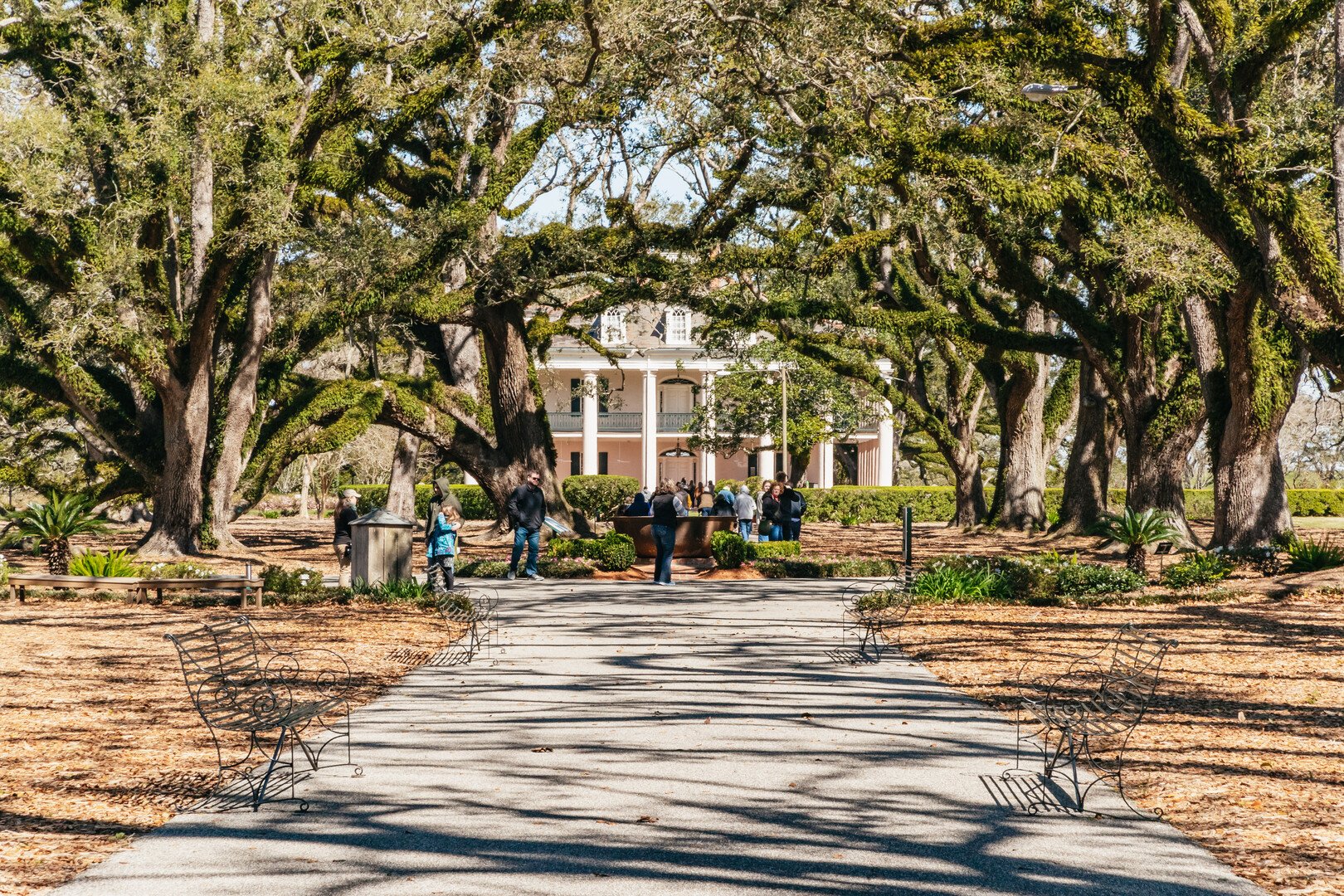
A stunning quarter-mile path shaded by 28 ancient live oaks planted in the 18th century.
A 1839 Greek Revival mansion showcasing the opulence and history of the era.
A poignant and essential educational exhibit detailing the lives of enslaved people.
Learn about the history of sugarcane production that shaped this region.
View the original plantation forge and learn about period craftsmanship.
Oak Alley serves those seeking the iconic aesthetic of the antebellum South, whereas Laura Plantation offers a more grounded exploration of Creole history. Selecting the right new orleans oak alley plantation and swamp tour tour requires deciding between grand visual spectacles and deep cultural narratives.
| Feature | Top pick Oak Alley | Laura Plantation |
|---|---|---|
Primary architectural style |
Greek Revival | Creole colorful style |
Focus of historical narrative |
The Big House and landscape | Enslaved community lives |
Ease of photography |
High—iconic oak tunnel | Moderate—intimate complex |
Grounds accessibility |
22 steps to access | Limited stairs required |
Guided tour structure |
Self-guided house/grounds | Strictly guide-led tour |
| See tickets → |
Verdict: Choose Oak Alley for its famous canopy views and photography, or select Laura Plantation to secure new orleans oak alley plantation and swamp tour tickets if you prefer a detailed, narrative-driven experience regarding the enslaved people who lived there.
Choose your ticket, select your date, and reserve in under two minutes. Secure checkout handled by our verified partner.
Instant confirmation by email, with a mobile voucher you can save offline. No printing, no queuing at a collection desk.
Arrive at the entrance, show your voucher on your phone, and walk in. Most tickets include priority or skip-the-line access.
Practical details for your visit straight from our verified partners — hours, access, rules, and how to get there.
3645 Highway 18
Main entry point for all tours.
Follow Great River Road (Highway 18) for direct access to the site.
Casual and comfortable clothing is recommended as much of the site is outdoors. Wear sturdy, comfortable footwear for walking the grounds and gravel paths.
Standard bags are permitted; however, large items may be restricted inside the Big House exhibit. Please consult on-site staff for storage options if needed.
Photography is encouraged throughout the grounds and exterior. To protect the integrity of the interiors, indoor photography is not permitted inside the Big House.
The site features paved and brick paths, though some areas may have uneven terrain. There is a 22-step staircase to the upper floor of the mansion; an iPad tour is available for those who cannot navigate the steps.
Mobile phones are permitted for use on the grounds. Please silence devices during guided tours of the Big House.
The new orleans oak alley plantation and swamp tour experience is family-friendly, with strollers permitted on the grounds. Children under 5 typically enter at no cost.
On-site dining is available at the restaurant and café, serving breakfast and lunch. Consumption of food and drink is restricted to designated areas and not allowed inside exhibits.
Pets are not permitted on the plantation grounds. Service animals are the only exception to this policy.
The new orleans oak alley plantation and swamp tour covers a historical site of profound significance. Please respect the Slavery at Oak Alley exhibit areas.
Best time to go, insider tips, nearby landmarks, and the cancellation fine print — flip through to skim what matters to you.
How crowds, weather, and events shift across the year.
Mild temperatures and lower rainfall make this an ideal time for exploring the grounds.
Expect high humidity; morning arrival is essential for a comfortable visit.
Pleasant weather returns, making it a popular season for the new orleans oak alley plantation and swamp tour.
Cooler days offer a unique light, especially in the late afternoon.
Small details that turn a good visit into a great one.
Secure your new orleans oak alley plantation and swamp tour tickets in advance to guarantee your Big House entry.
The best light for photography of the oak alley occurs between 08:30 and 10:30.
Avoid reliance on local rideshare apps; arrange private transport before leaving New Orleans.
Carry water during the summer months, as grounds are expansive and unshaded.
Review the conversation series times at the Slavery exhibit to enhance your educational experience.
Allocate at least 2 hours to fully experience both the Big House and the outdoor exhibits.
Non-bookable sights within a short walk — free to visit, easy to pair.
Focuses specifically on the history of enslaved people.
Flexible, no hidden fees.
All admissions purchased directly are non-refundable and non-transferrable. Please confirm your booking details before completing your 30 USD entry purchase.
Hand-picked options within walking distance — pick a district for vibe, or a specific hotel for convenience.
On-site historic cottages.
The quarter-mile canopy was planted in 1837, two decades before the Greek Revival mansion was finished. Jacques Telesphore Roman III commissioned the allee not as ornament but as a declaration: sugar wealth could rival the European estates he had toured. By the time the Big House opened in 1839, the 28 live oaks already formed a living colonnade 80 feet wide, their branches meeting overhead like the vault of a cathedral. The plantation operated as a working sugar estate until 1925; during the Civil War, Union occupation preserved the main house while nearby rivals burned. Oak Alley opened to the public in 1972, and today the 25-acre historic core interprets both the planter family's domestic life and the lives of the 120 enslaved people who worked the estate's fields and service quarters. The Big House's 1839 interior retains its Greek Revival plasterwork and period furnishings; the reconstructed slave quarters, added in the 1990s, present primary-source narratives and archaeological evidence. The site sits on Louisiana's Great River Road, Highway 18, a corridor that once held over 350 sugar plantations between New Orleans and Baton Rouge. Fewer than 40 remain, making Oak Alley one of the most intact examples of antebellum plantation architecture in the lower Mississippi valley. Combination tours pair the plantation visit with a bayou airboat excursion, typically 90 minutes south in the Barataria Basin or nearby Honey Island Swamp. These wetlands—cypress-tupelo forests threaded with slow-moving channels—represent the opposite of the plantation's ordered geometry. Bald cypress knees break the waterline; Spanish moss hangs in curtains; alligators, herons, and roseate spoonbills occupy an ecosystem largely unchanged since the Choctaw navigated it by pirogue. The pairing reflects Louisiana's geographic duality: disciplined agriculture on the levee-protected riverbank, untamed wilderness in the low-lying basins just beyond. The contrast is intentional. Visitors leave the symmetry of the oak alley and enter a landscape where water and land blur, where routes shift with the season, where the air smells of decay and bloom at once. Together, the two sites illustrate the state's ecological and cultural range within a single morning or afternoon.
"The quarter-mile canopy was planted in 1837, two decades before the mansion was finished."
A step-by-step walkthrough of the visit — what you'll see, how long each stage takes, and the details that matter.
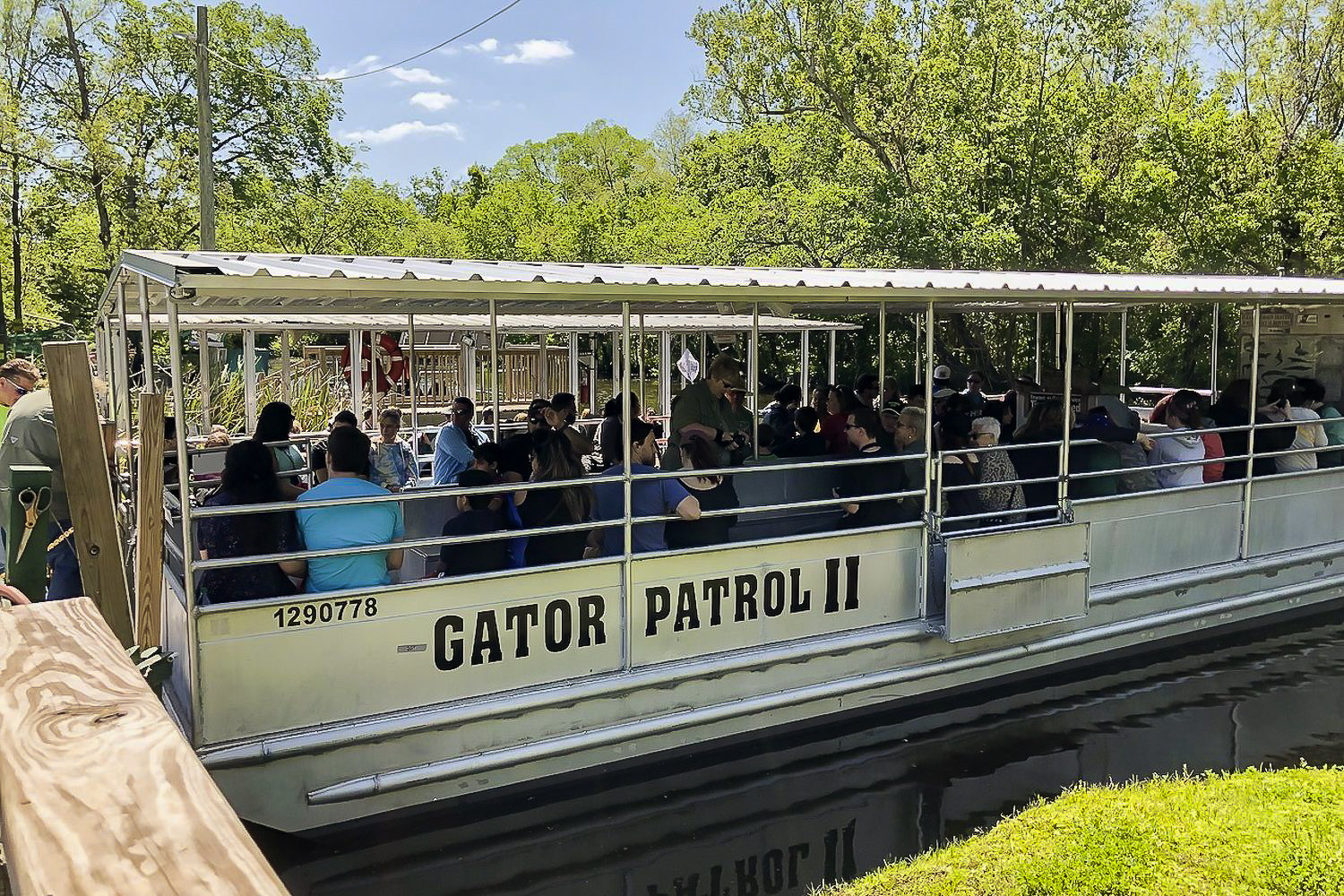
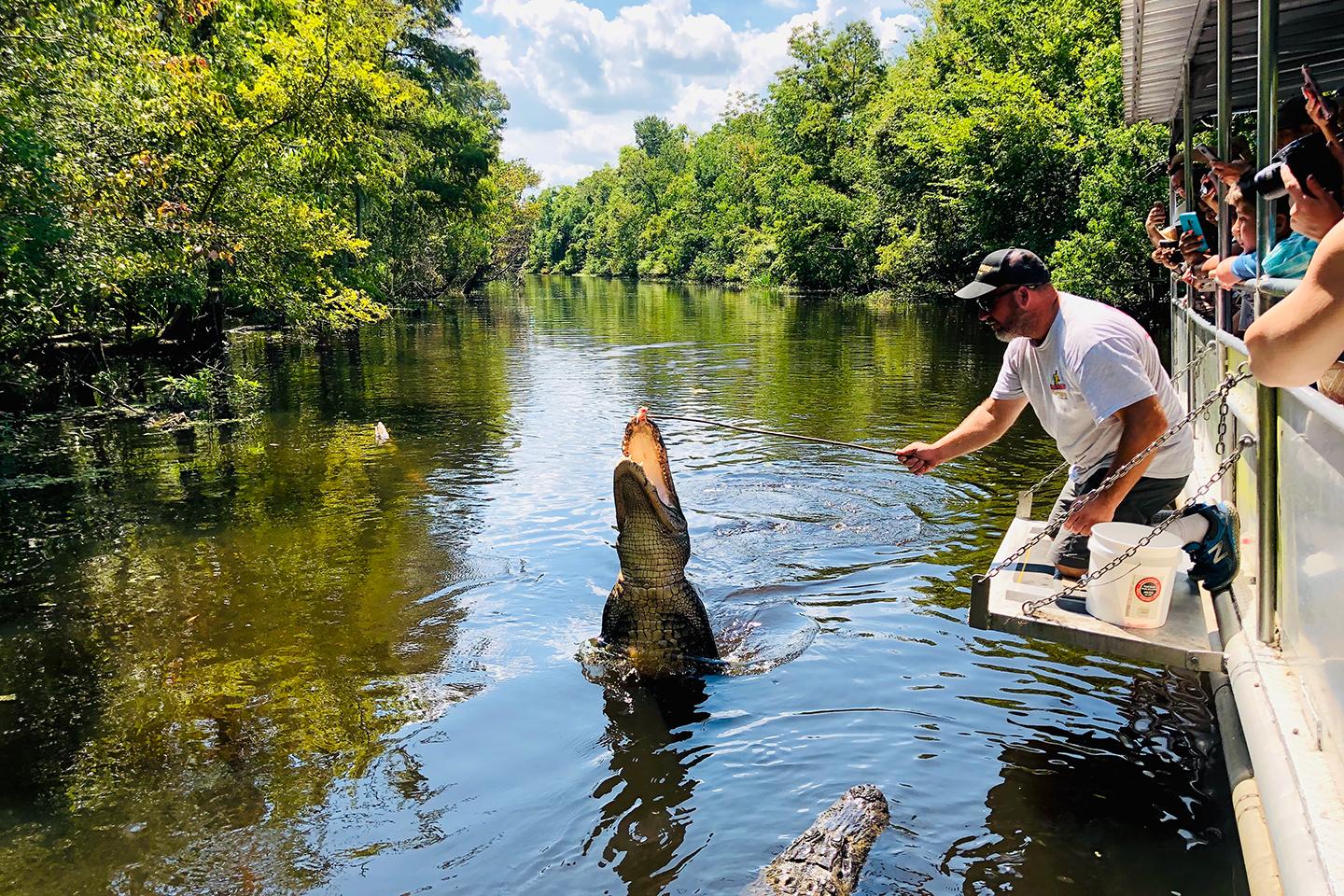
You arrive at 3645 Highway 18 before 10:30, when morning light slants through the live oak canopy and tour groups are thinner. The allee stretches ahead, a double row of trunks each six feet across, their branches braiding overhead. You walk the quarter-mile approach to the Big House, then climb 22 steps to the front gallery, where Greek Revival columns frame the river view. Inside, docents lead you through parlors and bedrooms furnished with 1840s-era pieces—rosewood armoires, horsehair settees, hand-painted porcelain. The tour continues to the reconstructed slave quarters behind the main house, where exhibits trace daily labor routines and post-emancipation lives. After the plantation portion, you board a coach south toward the swamp site. The airboat launch sits in a clearing where cypress knees jut from tea-colored water. You step onto the flat-bottomed vessel, and the pilot throttles into a narrow channel. Moss hangs in gray veils; an alligator slides off a log; a great blue heron lifts from the shallows. The boat skims over submerged roots, turns through tunnels of tupelo, and pauses in open ponds where lilies float. The pilot cuts the engine to let you hear the silence—wind in the cypress, a woodpecker's tap, water lapping the hull. The return ride brings you back to Oak Alley by mid-afternoon, the symmetry of the allee sharper now against the memory of the swamp's tangle.
Oak Alley Plantation is open daily from 08:30 to 17:00.
The grounds have accessible paths, but there are 22 steps to the upper floor of the house. An iPad tour is provided for those who cannot climb the stairs.
This ticket covers access to the historic site, exhibits, and the guided Big House tour.
Photography is not allowed inside the mansion to protect artifacts.
Arrive between 08:30 and 10:30 to enjoy the best light and avoid mid-day tour crowds.
Prohibited items include drones, weapons, and professional commercial gear.
Pets are not allowed on the grounds, except for service animals.
Casual attire and comfortable walking shoes are recommended.
Yes, the restaurant serves breakfast and lunch daily.
The site is best reached by private car or booked transport, as taxi and rideshare services are limited.